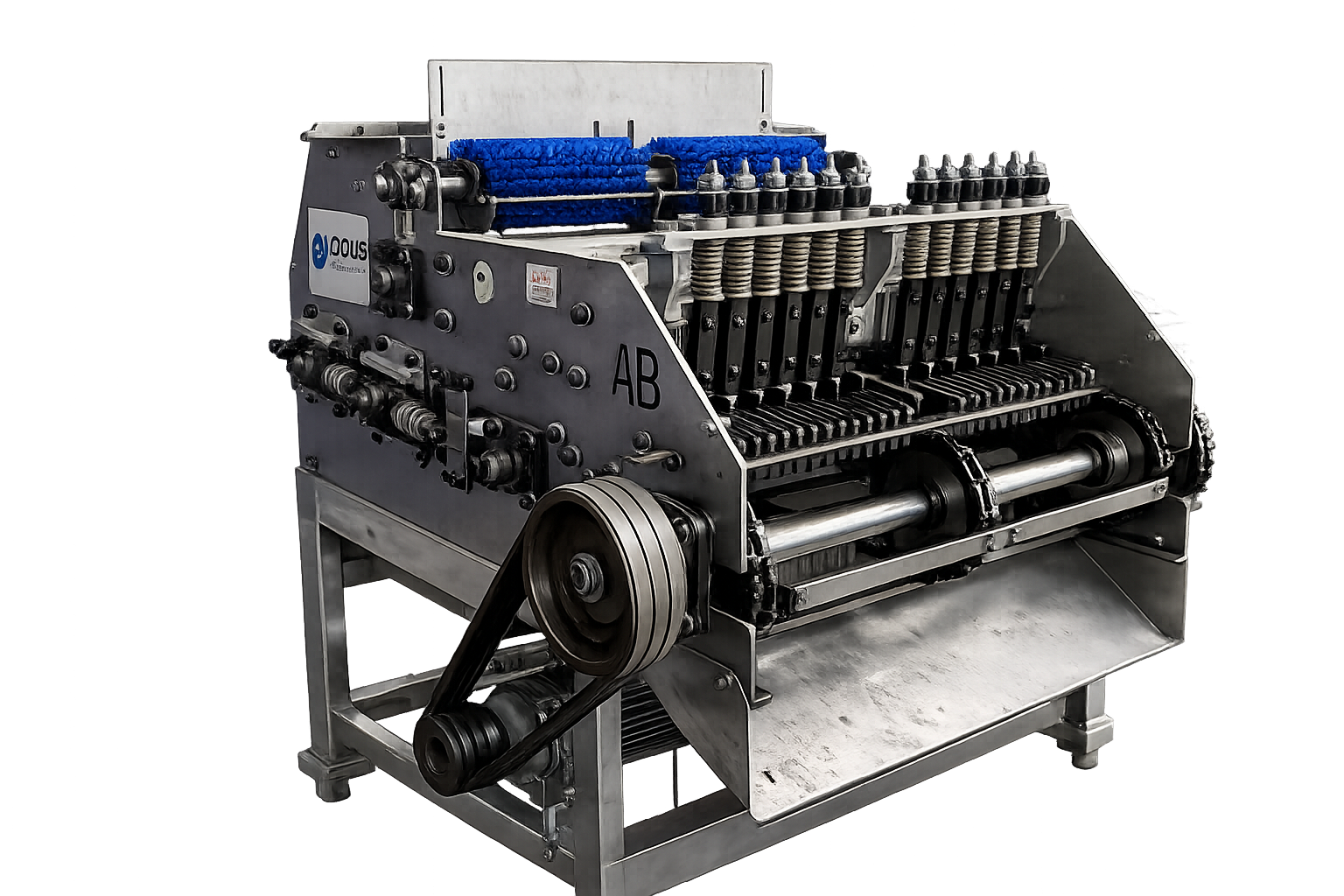
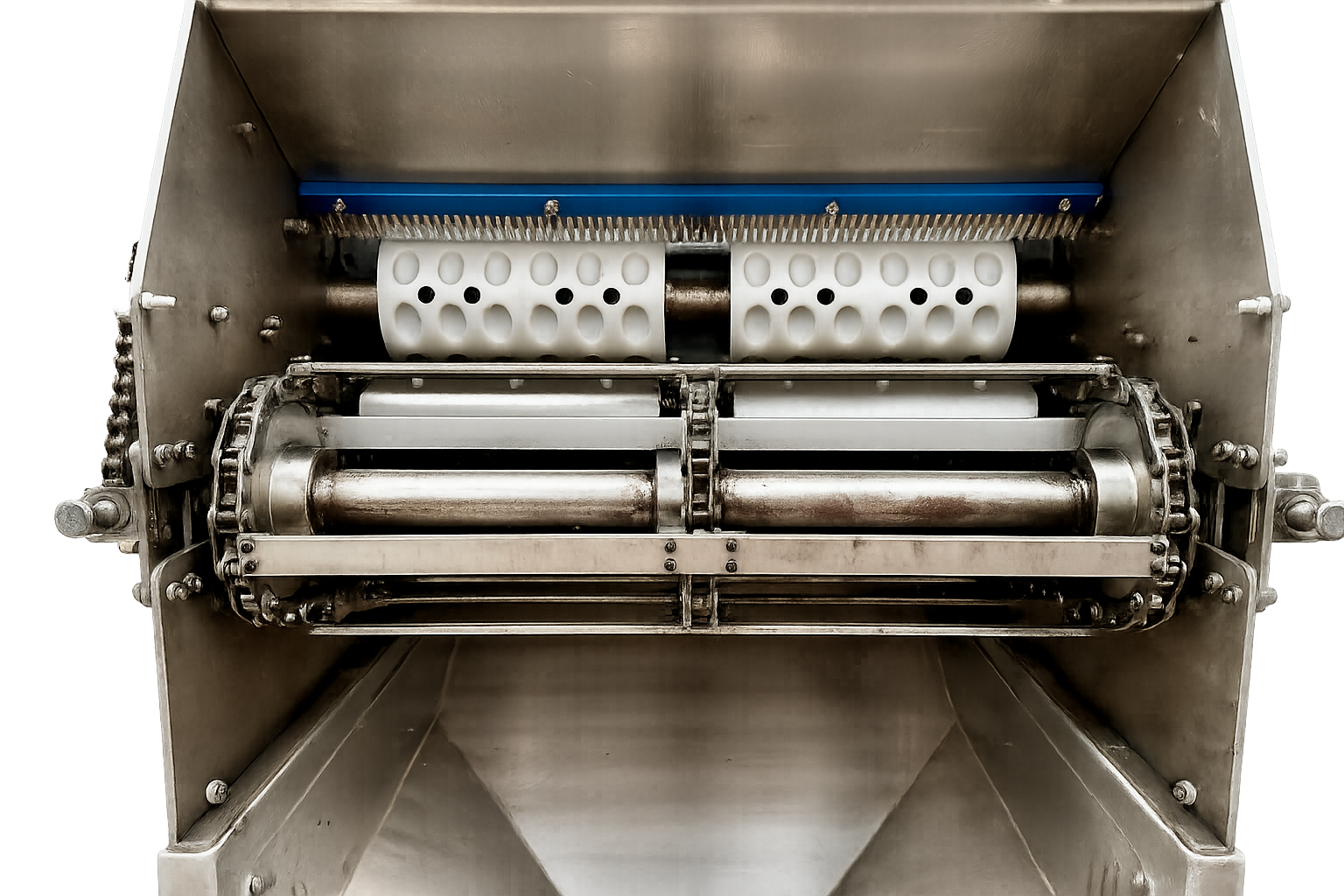
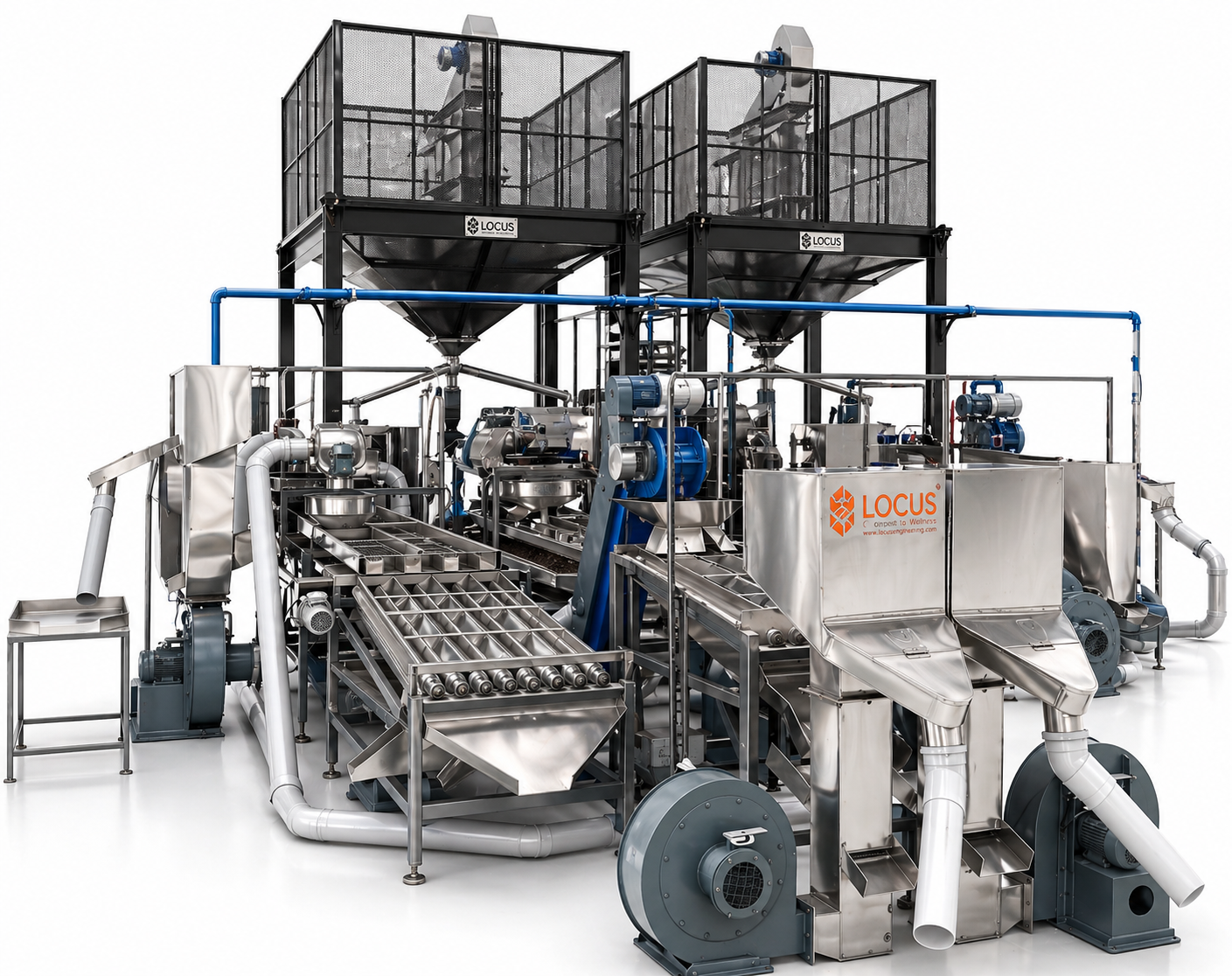
After curing, cured RCN moves into the shelling line, where horizontal blade shellers crack shells open in one pass while a chain of vibratory separators, blowers and roller graders isolate clean kernel from shell and testa — all with minimal breakage.
A shelling line has to open shells cleanly in one pass and then fully separate kernel from shell, testa and un-scooped nuts — without grinding kernels into pieces along the way.
Shelling machines are selected by blade count for the incoming size grade; separating equipment then runs as one interconnected line with a shared control panel and VFD.
6, 8, 10 or 12-blade rollers crack shells in a single pass, sized to match the incoming A/B or C/D grade.
Two vibratory separation stages progressively isolate clean kernel from shell fragments and debris.
Two 2 HP blowers feed a dedicated blowing grader that lifts away lighter shell and testa by airflow.
Scooping machines 1 and 2 clear residual kernel from shell halves, backed by a manual inspection table for quality checks.
A dedicated roller grader plus an uncut/un-scooped separator route imperfectly shelled nuts back for a second pass.
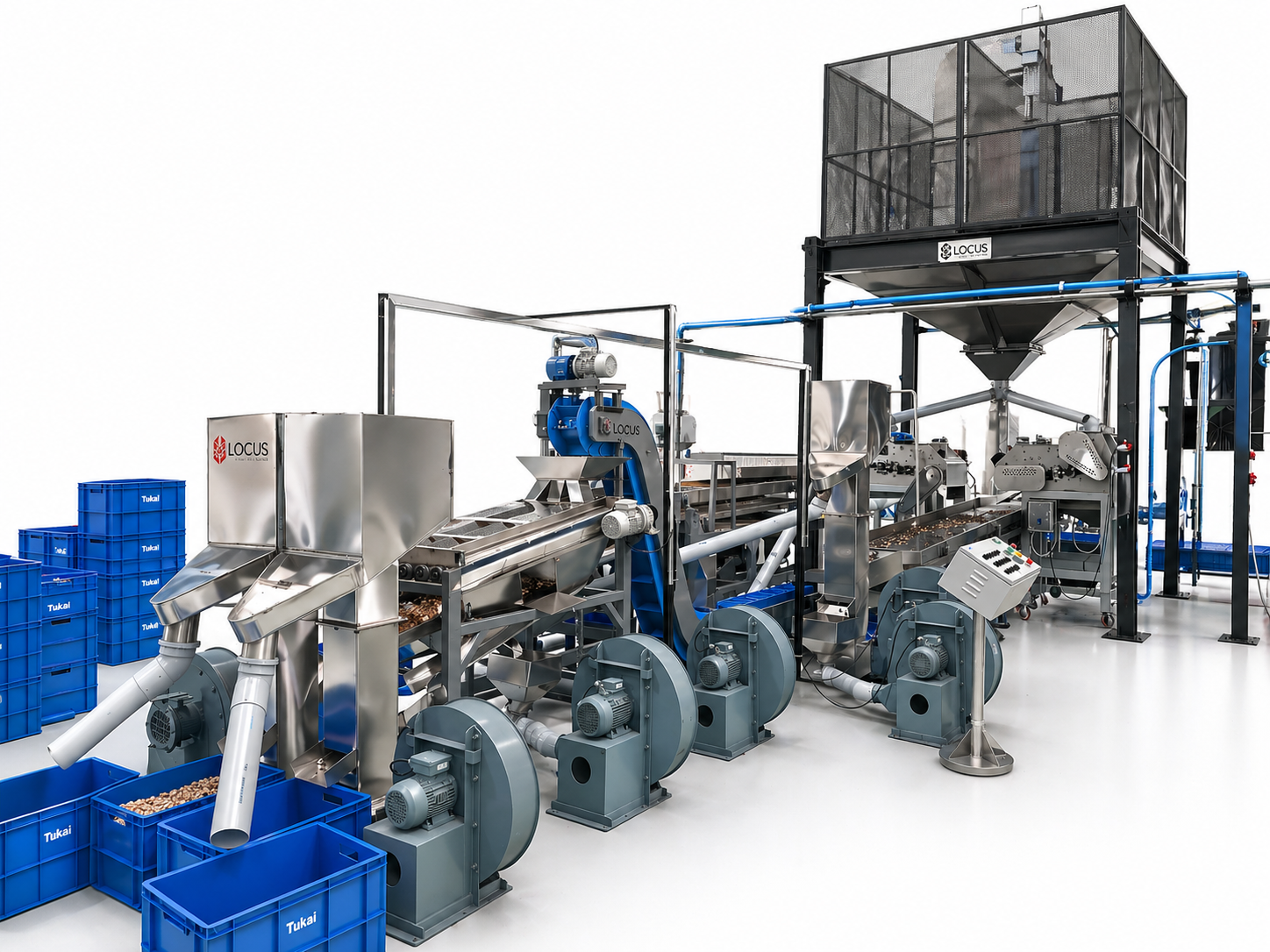
Feeding hoppers, conveyors, separators and blowers all run off one control panel with VFD speed control for line balancing.
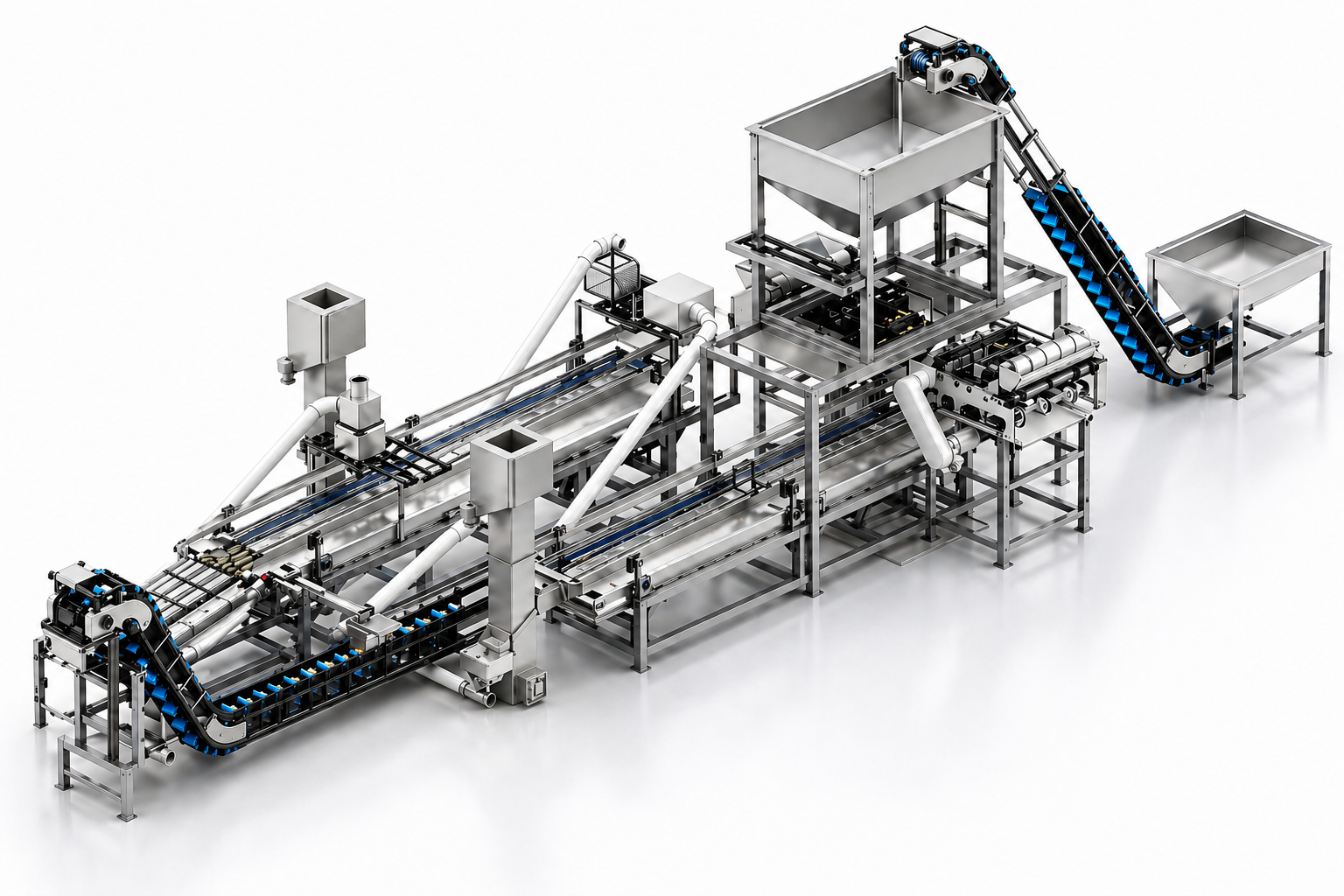
Full separating lines are built from feeding hopper through kernel carrying conveyor to inspection conveyor, recovering the maximum whole-kernel yield from every batch.
Shelling and separating equipment is engineered to run continuously downstream of the cooking and curing system, feeding straight into drying and peeling.
Cured RCN feeds from the hopper and conveyor into the shelling machine, matched by blade depth of cut to the incoming size grade.
Shelled material passes through the primary vibratory separator and kernel separator to begin isolating kernel from shell.
Twin blowers and the blowing grader remove lighter shell and testa fragments by airflow.
Scooping machines 1 and 2 recover residual kernel from shell halves, checked on the manual inspection table.
A secondary vibratory separator and roller grader refine the output, while the uncut/un-scooped separator routes leftover pieces back for reprocessing.
Clean kernel travels the kernel carrying conveyor to the inspection conveyor, ready for drying.
Four blade configurations, each matched to a specific size grade and throughput range.
| Specification | 6-Blade | 8-Blade | 10-Blade | 12-Blade |
|---|---|---|---|---|
| Rated capacity | 100–160 kg/hr | 200–260 kg/hr | 280–340 kg/hr | 350–500 kg/hr |
| Typical size group | Configured per incoming A/B or C/D grade from the sizing/grading stage | |||
| Broken ratio | Under 4% | |||
| One-go shelling efficiency | 85–95% | |||
Complete separating lines are engineered around these shellers with the full machine set below, running at up to 85–95% automation.

Overhead separator silos, kernel/shell blower units and control panels running as one integrated line.

Shelling machine, bucket elevator and separating stages feeding directly into crated kernel output.
From installation and commissioning to spare parts and troubleshooting, our engineering team supports your shelling and separating line throughout its working life — protecting your whole-kernel yield.
Talk To Our Engineers