Raw Cashew Curing System

Raw Cashew Curing System

Fresh-cooked RCN needs to rest before it will shell cleanly. LOCUS curing bins hold cooked nuts in ventilated 5 MT partitions overnight, so the next day's shelling line always starts with nuts that are properly cured — not straight off the cooker.

10 MT Bin Capacity
5 MT Per Partition
MS Perforated Sheets
Overnight Rest Before Shelling
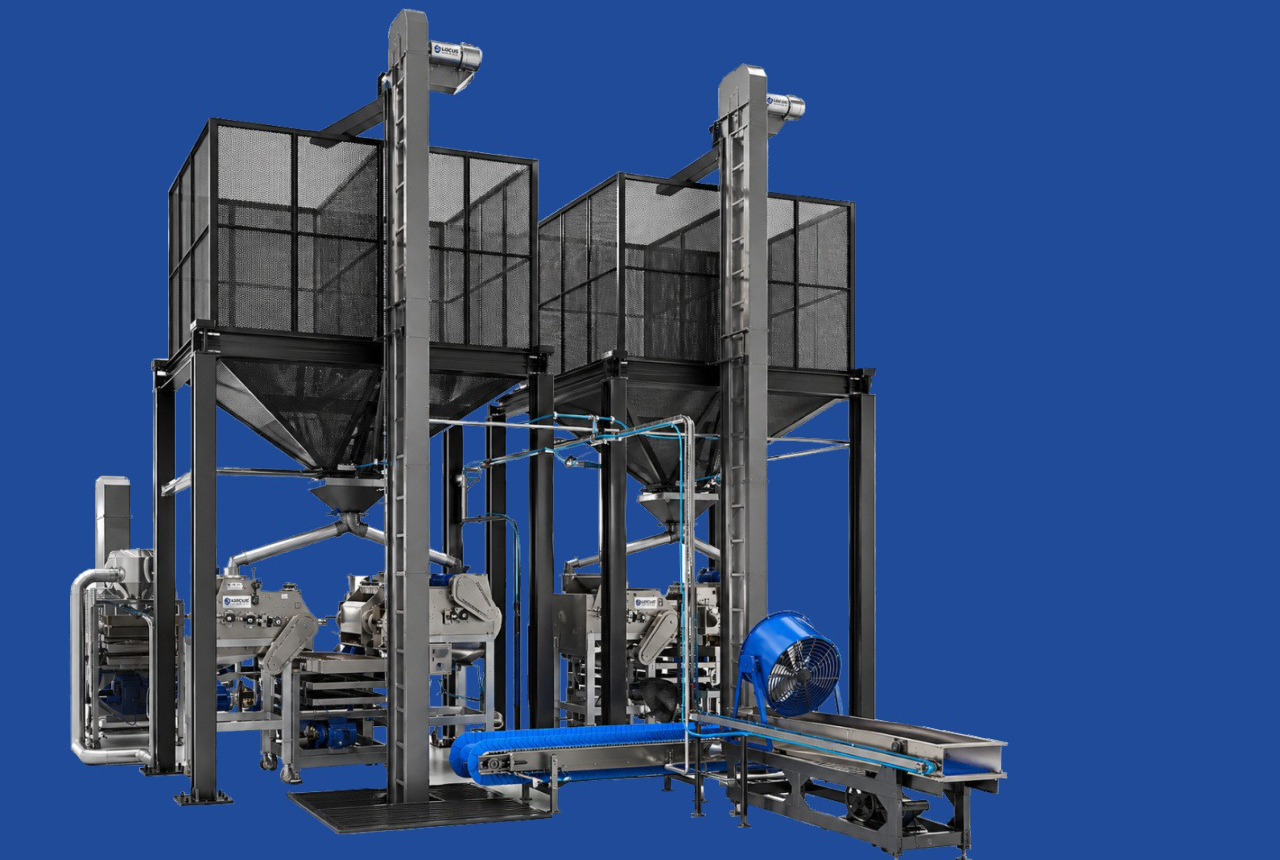
LOCUS RCN curing section with vertical bucket elevators and 10 MT curing bins
Why Curing Matters

The rest period that makes shells crack cleanly

RCN straight off the cooker still needs time for internal moisture to redistribute evenly through the shell and kernel. Curing overnight in ventilated bins is what lets the shelling line hit its rated whole-kernel yield the next morning.

  • Vertical bucket elevators lift cooked RCN from the cooker discharge straight into the curing bin hoppers
  • Pneumatically operated conveyor outlet and selection hopper outlet control exactly where each batch is routed
  • 10 MT curing bins split into 5 MT partitions, so one side can rest while the other feeds the shelling line
  • MS perforated sheets and frames keep air moving through the resting RCN, not just around it
  • Supplied as detached, pre-fabricated frames and sheet material — final assembly happens on your site
  • High-capacity bins beyond the standard 10 MT size can be engineered to match your daily cooking throughput

Curing, by the numbers

10 MT Bin capacity
5 MT Per ventilated partition
2 Bins per elevator pair (standard)
1 day Typical rest cycle
Machine Architecture

What's inside a LOCUS curing section?

The curing section sits directly between the cooking system and the shelling line, holding one day's production while the previous day's batch feeds shelling below.

Vertical bucket elevators

Lift cooked RCN straight from the cooker discharge conveyor up into the curing bin hoppers, no manual handling required.

Pneumatic outlet selection

Pneumatically operated conveyor and selection hopper outlets route each batch to the correct bin partition automatically.

10 MT bins, 5 MT partitions

Each bin splits into two 5 MT partitions, so fresh cooked RCN rests on one side while cured RCN feeds shelling from the other.

MS perforated construction

Perforated mild steel sheets and frames let air circulate through the resting nut mass evenly across the whole partition.

Shipped disassembled

Frames and sheet material are supplied pre-fabricated and detached, with final assembly and welding done on site.

Scalable to project size

Standard 10 MT bins suit most lines; high-capacity bins can be engineered for projects running 20 MT to 50 MT per shift.

Process

How the curing section works

  • 1

    After cooking, RCN is unloaded into a hopper and transferred by conveyor to a 5 MT capacity curing bin partition.

  • 2

    The nuts rest in the ventilated, perforated bin overnight, allowing moisture to redistribute evenly through shell and kernel.

  • 3

    Meanwhile, RCN cooked and cured the previous day is drawn from the partition below and fed directly to the shelling and separating line.

  • 4

    The cycle repeats daily, so one partition is always resting while the other is always feeding shelling — no gap in the line.

LOCUS curing bins with vertical bucket elevators and cooling fan feeding the shelling line
Specifications

Curing section specifications

Standard bins cover most single-line installations; high-capacity bins are engineered per project for larger daily throughput.

Specification Standard Curing Bin
Bin capacity 10 MT, in two 5 MT partitions
Bin construction MS perforated sheets and frames
Material handling Vertical bucket elevators, pneumatic conveyor & selection hopper outlets
Supply condition Detached, pre-fabricated frames and material
Final assembly On site, under client's labour and welding scope
High-capacity bins Manufactured to order for projects above standard throughput

The curing section is supplied as part of a complete RCN processing line — positioned directly between the LOCUS cooking system upstream and the shelling & separating system downstream.

LOCUS engineering and service team
Support

24/7 Service & Support

From installation and commissioning to spare parts and troubleshooting, our engineering team supports your curing section throughout its working life — keeping the daily rest-and-release cycle running without a gap.

Talk To Our Engineers